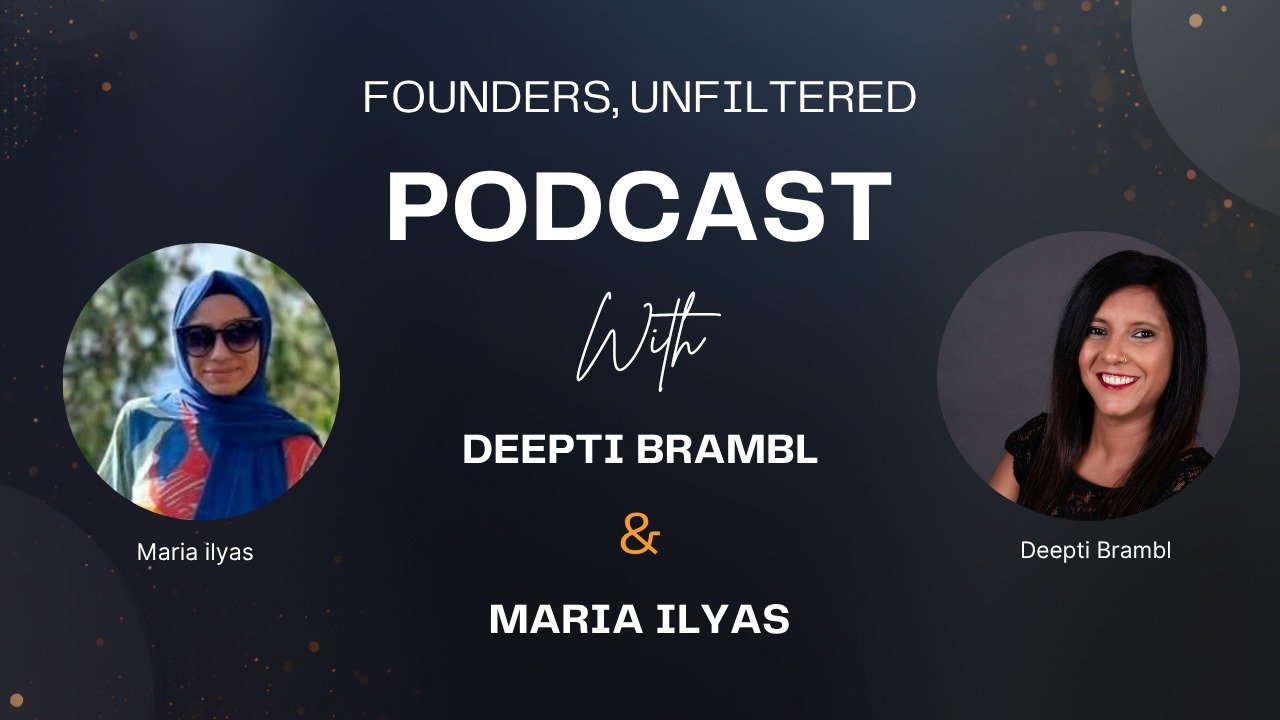
On this episode of Founders Unfiltered, we sat down with Deepti Brambl, co-founder of Kaylaan — one of the most recognized toothpaste tablet brands in the US — for a raw conversation about sustainability, 87 failed batches, and why marketing might be the most important skill an engineer never learns.
Most people never think twice about their toothpaste tube. Deepti Brambl couldn’t stop thinking about it.
An engineer by training — with a background in electrical and mechanical engineering, a bit of chemistry, and years working in AI and data science — Deepti wasn’t an obvious candidate to start an oral care company. But alongside her husband and co-founder Wells, a toxicologist who understood the chemistry behind every ingredient, she built Kaylaan into a brand that’s now hard to miss anywhere toothpaste tablets are mentioned.
Here’s how she got there.
It started in the recycling bin
Deepti grew up in the Himalayas, where sustainability was never a lifestyle choice — it was simply how you lived. Her family shopped with their own reusable bags, plastic was scarce, and you reused whatever you could. As she put it, you use what you need and waste as little as possible.
Arriving in America, she was thrilled by the endless selection of products and assumed everything was recyclable because of the little logo on the packaging. That illusion didn’t last long. She quickly ran into the messy reality of plastic recycling — the confusion over what actually qualifies, the effort it takes to sort correctly, and the way a single non-recyclable item tossed in the wrong bin can contaminate the whole batch and send it all to landfill.
The climate anxiety that followed pushed her to act. She and Wells decided to combine their skills into a product — not to solve the entire plastic crisis, but to chip away at one corner of it. When they audited their own household trash, one culprit stood out everywhere: toothpaste tubes. Everyone on the planet brushes their teeth, almost none of those tubes ever get recycled, and the very first one ever manufactured is probably still floating around somewhere on Earth. That thought stuck with them.
Earning her US citizenship gave the whole idea an extra charge. It felt like a fresh start — a chance to build something of her own that actually mattered and stayed true to where she came from.
87 trials in the garage
Rather than outsource formulation like most brands do, Deepti and Wells ran their own R&D so they could keep full control of the product. They started by listing clean ingredients that genuinely work, taste good, and tackle real oral care problems like plaque and gingivitis.
The chemistry they had. The tableting, they did not.
“We had zero tableting experience. We had to learn everything on the job.”
Their very first machine was a hand-crank press — bought purely to find out whether they could form a tablet at all. Once that worked, they upgraded to something better. And then came the grind: it took exactly 87 trials to land on a tablet that both tasted good and actually did its job. Like most startups, they began in the garage, handing samples to friends and family, collecting feedback, and iterating until they had something genuinely marketable.
Then there was the other hurdle — nobody knew what a chewable toothpaste tablet even was. People are conditioned to squeeze a tube, so handing them a tablet and saying “just chew and brush” triggered a wave of skepticism: Is this a gimmick? Does this even work? A huge part of the early job wasn’t selling at all. It was educating.
Right product, right moment
Toothpaste tablets have technically existed since around 2003, but the format only really caught fire around 2021 — right when Kaylaan launched. It was near-perfect timing. Post-pandemic, people were newly curious about sustainability and plastic waste, and as Deepti described it, that curiosity finally met action.
She’s refreshingly honest that none of this was a master plan. They didn’t even set out to build a brand — they simply listed the product on Etsy and became a number one bestseller almost immediately. Catching the sustainability wave was luck. But the trial-and-error, the endless Googling, and the sheer stubbornness behind it were not.
That stubbornness came from a genuine love of problem-solving. Solve one, and the next is already waiting — chaotic, but energizing for an engineer. And her take on failure became a running theme of the whole conversation: the more you fail, the more you learn, and every setback made the business stronger. Luck, she says, can only take you so far. The rest is hard work and being just a little bit crazy about not giving up.
Going all in
Because they never planned to become a brand, they deliberately avoided the investor route. Once Etsy proved there was real demand, the question shifted from whether to build a brand to what kind — and their answer was a company they’d actually want to work for. That meant real sustainability, not greenwashing. They earned their B Corp certification, and after consulting two dentists who were adamant about its importance, they committed to including fluoride and working through the necessary FDA processes.
Deepti eased into it, going from a full-time job to part-time while running the company, before finally coming on board full-time last year — a decision she credits with keeping the company’s growth from stalling out. The plan throughout was to prove the product worked and could generate revenue first, using that revenue to pay for the marketing and machinery instead of leaning on outside money.
Her sharpest reflection was about a skill her entire background left out:
“You can have a really bad product and great marketing. In our case, we have a great product but we’re not very good at marketing.”
Engineering, medical, and pharma backgrounds, she points out, drill science, science, science — and teach nothing about marketing. Her advice to any technical founder: before you dive in, take a couple of marketing classes.
What worked (and what didn’t)
Kaylaan’s growth came from stacking channels and learning in public. The standouts from Deepti’s playbook:
- Sustainability stores were the early rocket fuel. Partnering with small, independent eco-friendly shops (not big-box retail) gave them a huge boost — because those stores also educated their own customers on what a toothpaste tablet is. As the stores grew, Kaylaan grew with them, and many of those very first customers are still around, spreading the word.
- Amazon broadened the audience — and toughened the product. Opening up to a mainstream crowd surfaced a flood of issues, and the early ratings were rough. But that harsh feedback is exactly what pushed the product to get better.
- Google Ads consistently deliver; Meta didn’t. Google Ads have reliably driven results for them. Instagram and Facebook, despite plenty of experimentation, never produced a return worth chasing.
- SEO and email are the current focus. They’ve recently optimized the website for conversion and leaned into email marketing and SEO for durable, compounding growth.
- Flavor is a moat. As their own manufacturer, they control how many flavors they offer — and they’re the only brand with five exotic options. Not everyone likes mint, so strawberry became a hit with kids, and cinnamon serves older customers with sensitive teeth. Nearly every flavor came straight from customer requests, and strawberry now ranks well on search without a cent of ad spend.
A couple of details set the buying experience apart, too. A trial pack (in both fluoride and non-fluoride) lets newcomers sample every flavor before committing. Most people start with a single order “for travel,” then realize how much plastic they’re cutting out — and quietly convert into subscribers. Rather than badgering people to subscribe, Kaylaan defaults to a one-time purchase and lets the product earn the recurring order. They even size their packs at 90 tablets instead of the industry-standard 62, building in a little redundancy for guests, extra brushing, and shipping time — all while sticking with slower, lower-carbon USPS delivery.
Underpinning much of this is Shopify, which Deepti is unabashedly enthusiastic about. They launched on the free plan while bootstrapping and leaned on its integrations and data as they scaled, even tapping Shopify Capital for funding during busy seasons. Her developer-minded takeaway: the less custom work you pile on, the easier life is — and the better it is for site speed and SEO.
Deepti’s advice for founders
Her closing thoughts were as unfiltered as the rest of the episode.
Know your “why.” It’s your north star, and it quietly shapes every decision you make. If your goal is to get rich quick, that’s one strategy. If you want to build something sustainable and lasting, that’s a harder road — but a far more rewarding one.
Be ready for the loneliness. Entrepreneurship is isolating and chaotic. There will be stretches where you barely see friends or family, nights you lose sleep, and moments you question everything. Every founder passes through it. At some point, she says, you stop fighting the chaos and simply make peace with it: this is messy, this is my life for the next couple of years, and I’m okay with that.
Execute over-plan. You don’t need to figure everything out on the first try. Get started, break things, fail — and let those failures become your strength. What looks clean on paper always plays out differently in reality, so it’s better to ship, stumble, stand back up, and go again. As Deepti puts it, once you’ve become a “master of failure,” the next challenge doesn’t scare you nearly as much.
Where to find Kaylaan
If you want to make the switch:
- Grab a trial pack on Kaylaan’s website [insert link] to sample every flavor — fluoride and non-fluoride — before you pick your favorite.
- Find them on Amazon for easy reordering.
- Or shop at your local sustainability store — the small, independent shops that helped put Kaylaan on the map in the first place.
Thanks to Deepti Brambl for joining us on Founders Unfiltered and sharing the real, unfiltered story behind Kaylaan. Watch or listen to the full episode [Launching Kaylaan Toothpaste Tablets on Etsy with Deepti Brambl] for the complete conversation — including the flavors that came straight from customer emails and why 90 tablets beats 62.