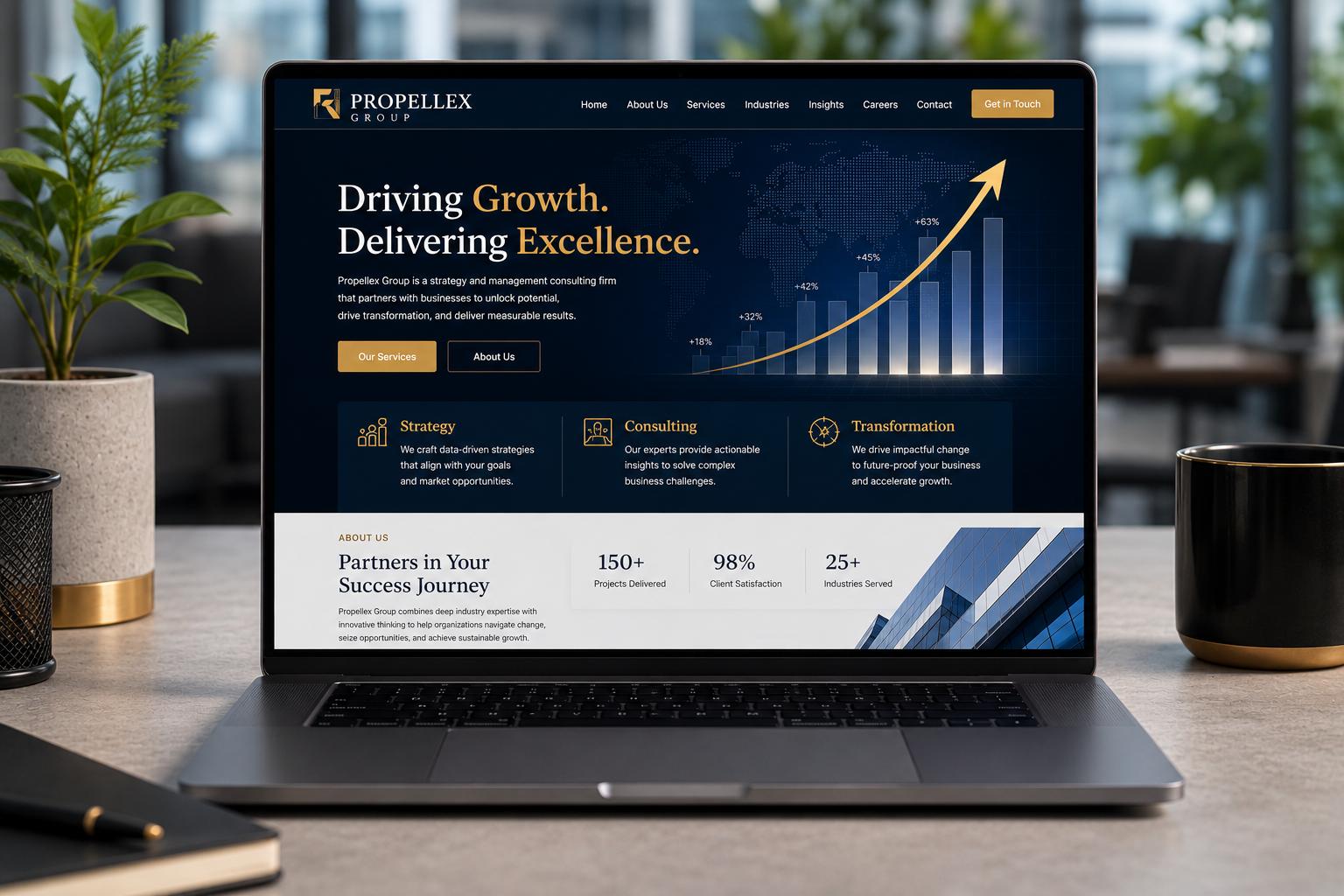
Your website is your most powerful business development tool. For consulting firms, it’s often the first impression a potential client gets — and in a competitive market, that first impression either opens a door or closes it permanently.
Whether you’re a boutique strategy firm, a management consultancy, or a niche industry advisor, your website needs to do more than look professional. It needs to establish authority, communicate value clearly, and guide visitors toward taking action. This guide covers the consulting firm website best practices you need to follow to turn your site into a genuine client acquisition engine.
Why Your Consulting Firm Website Matters More Than You Think
Many consulting firms underinvest in their websites, assuming that referrals and relationships will carry the business. While referrals are valuable, even referred prospects almost always visit your website before agreeing to a meeting.
Your site validates your credibility, communicates your expertise, and signals the quality of work clients can expect from you. A poorly designed or outdated site can undermine even the warmest introduction.
1. Start With a Clear Value Proposition
Lead With What You Do and Who You Help
The moment someone lands on your homepage, they should immediately understand:
- What your firm does
- Who you serve
- What outcome you deliver
Avoid vague headlines like “Transforming Businesses for a Better Tomorrow.” Instead, be specific: “We help mid-size manufacturing companies reduce operational costs by 20% or more.”
Clarity beats cleverness every time.
Place Your Value Proposition Above the Fold
Your core message should be visible without scrolling. Visitors make snap judgments within seconds. Don’t bury your best pitch below a flashy animation or a generic stock photo.
2. Design for Trust and Professionalism
Keep the Design Clean and Uncluttered
Consulting is a relationship-based, high-trust profession. Your website design should reflect that. Use clean layouts, consistent typography, and a restrained color palette. Avoid busy graphics, excessive animations, or anything that distracts from your message.
White space is your friend. It signals confidence and makes your content easier to read.
Use High-Quality, Authentic Imagery
Stock photos of people shaking hands in generic boardrooms erode trust. Wherever possible, use real photos of your team, your office, or your actual work. Authentic imagery makes your firm feel human and approachable.
If you do use stock photos, choose ones that feel natural and relevant to your industry.
3. Create Compelling Service Pages
Be Specific About What You Offer
Each service you provide should have its own dedicated page. A single “Services” page with bullet points is a missed opportunity. Dedicated pages allow you to:
- Go deep on each offering
- Rank for specific search terms
- Speak directly to the client’s pain points
Describe not just what the service is, but what the client gets and what changes after working with you.
Address Client Pain Points Directly
Great service pages are written from the client’s perspective. Start with the problem they’re experiencing, then position your service as the solution. This approach resonates far more than a list of deliverables.
4. Showcase Social Proof and Results
Feature Case Studies Prominently
Nothing sells consulting services like proof that you’ve done it before. Case studies are among the most persuasive content on any consulting website. Each case study should follow a simple structure:
1. The Challenge — What problem did the client face?
2. The Approach — How did your firm tackle it?
3. The Results — What measurable outcomes did you deliver?
Quantify results wherever possible. Numbers are credible and memorable.
Include Client Testimonials
Written testimonials from real clients add significant trust. Video testimonials are even more powerful. Place them strategically throughout your site — on the homepage, service pages, and your contact page.
Display Logos of Past Clients
A simple row of recognizable client logos communicates experience and credibility instantly. Even if the companies aren’t household names, a clean logo bar signals that real organizations have trusted you with their business.
5. Build SEO Into Your Site From the Ground Up
Target the Right Keywords
Search engine optimization helps your firm get discovered by potential clients who are actively looking for what you offer. Focus on keywords that reflect:
- Your industry (healthcare consulting, financial advisory)
- Your service type (change management consulting, IT strategy)
- Your geography (management consulting firm in Chicago)
Use tools like Google Search Console, Ahrefs, or SEMrush to find terms with realistic search volume and manageable competition.
Optimize Every Page
Each page on your site should have:
- A unique, keyword-rich title tag
- A compelling meta description
- Clear header structure (H1, H2, H3)
- Internal links to related pages
- Fast loading speed and mobile responsiveness
Publish Thought Leadership Content
A regularly updated blog or insights section does double duty. It improves your search rankings and positions your consultants as subject matter experts. Aim for articles that answer real questions your ideal clients are searching for.
Also read: Case Studies on Improving Brand Visibility Through AEO Strategies
6. Make It Easy for Clients to Take the Next Step
Include Clear, Compelling Calls to Action
Every page on your website should guide visitors toward a specific action. Common calls to action for consulting firms include:
- Schedule a free discovery call
- Download our whitepaper
- Request a proposal
Use action-oriented language and make buttons visible and easy to find. Don’t make visitors hunt for how to contact you.
Simplify Your Contact Options
Your contact page should be straightforward and friction-free. Include a simple form, a direct email address, and a phone number. If you use a scheduling tool like Calendly, embed it directly on the page. The easier you make it to reach out, the more inquiries you’ll receive.
7. Optimize for Mobile and Speed
Mobile Experience Is Non-Negotiable
More than half of all web traffic comes from mobile devices. If your site isn’t fully responsive and easy to navigate on a smartphone, you’re losing potential clients. Test your site across multiple screen sizes and fix any layout or usability issues immediately.
Page Speed Affects Both UX and Rankings
Slow websites frustrate visitors and hurt your Google rankings. Use tools like Google PageSpeed Insights to identify issues. Common fixes include compressing images, enabling browser caching, and minimizing unnecessary scripts.
8. Keep Your Content Fresh and Accurate
Update Team Bios and Case Studies Regularly
Nothing undermines credibility like outdated information. Make sure your team page reflects your current staff, your case studies feature recent work, and any statistics or claims you make are current and accurate.
Review and Refresh Annually
Set a reminder to conduct a full website audit at least once per year. Look at your analytics, review your messaging, update your content, and ensure the technical health of the site is sound.
Also read: Website Development Price in Pakistan: A Clear & Honest Cost Breakdown (2026 Guide)
Conclusion: Your Website Is Always Working for You
A well-built consulting firm website isn’t just a digital brochure — it’s an always-on business development asset that works around the clock to attract, educate, and convert the right clients.
By following these consulting firm website best practices — leading with a clear value proposition, building trust through social proof, optimizing for search, and making it easy to take action — you set your firm up to compete and win in an increasingly digital marketplace.
Start with the fundamentals, keep improving based on data, and treat your website as a living investment. The firms that take their online presence seriously are the ones that consistently fill their pipelines and command premium fees.
Ready to upgrade your consulting firm’s website? Start with one improvement today — and build from there.
Hire Propellex for WordPress Development